Many patients ask one important question before booking breast enhancement: are breast fillers safe?
The answer is not a simple yes or no. Breast fillers may be discussed in some clinical settings for selected patients, but safety depends on the product, the provider, the clinic, the treatment plan, and your medical history.
This guide explains the key risks, common side effects, safety checks, red flags, and questions to ask before considering breast fillers in Dubai.
Are Breast Fillers Safe? Quick Answer
Breast fillers need careful medical assessment. A qualified provider should review your goals, breast history, health background, screening needs, and product suitability before recommending any treatment.
A safe plan should never focus only on volume. It should also consider breast shape, symmetry, tissue quality, imaging history, aftercare, and realistic expectations.
Patients should also ask clear questions about the product. Different countries may follow different rules, so your clinic should explain what product or method they plan to use and why it suits your case.
At Tinkermoon Clinic, Breast Fillers in Dubai start with consultation, patient education, realistic planning, and safety-focused guidance.
| Safety Point | Why It Matters |
|---|---|
| Medical consultation | The provider must check your goals, health history, and suitability first. |
| Product transparency | You should know what product or method the clinic plans to use. |
| Qualified provider | Breast-area treatments need strong anatomy knowledge and medical judgment. |
| Licensed clinic | A clinical setting supports hygiene, consent, records, and follow-up care. |
| Breast screening history | Your provider should discuss imaging, previous findings, or breast health concerns. |
| Clear aftercare | Good aftercare helps reduce risk and supports safer recovery. |
What Are Breast Fillers?
Breast fillers are injectable treatments that some patients consider for subtle breast enhancement. They may aim to improve fullness, contour, or mild asymmetry without implant surgery.
Patients usually search for breast fillers when they want a softer and less invasive option than surgery. Many want a natural-looking improvement rather than a major size change.
Still, the breast area needs extra caution. It plays an important role in health screening and long-term monitoring. This is why consultation matters more here than in many other cosmetic treatments.
A good clinic should explain the limits of fillers. If you want a larger or longer-lasting breast enhancement, breast implants may be more realistic to discuss.
If you are comparing both options, read our guide on Breast Fillers vs Breast Implants.
Why Breast Filler Safety Needs Extra Care
Breast filler safety needs extra care because the treatment area is not only cosmetic. Breast tissue may need future imaging, screening, or medical checks.
Your provider should ask about previous breast procedures, lumps, imaging results, family history, pregnancy plans, breastfeeding, allergies, and medical conditions.
You should also ask whether the treatment may affect future mammograms, ultrasound, MRI, or clinical breast exams. This question matters even if you only want subtle enhancement.
Do not skip this step. A short consultation that only discusses price is not enough for breast-area treatment.
For patient education, the U.S. FDA explains that dermal fillers are medical device implants and lists approved uses and risks. The FDA also warns patients about unapproved filler use for body contouring and breast or buttock enlargement. You can review the FDA page on dermal fillers and soft tissue fillers.
Common Side Effects of Breast Fillers
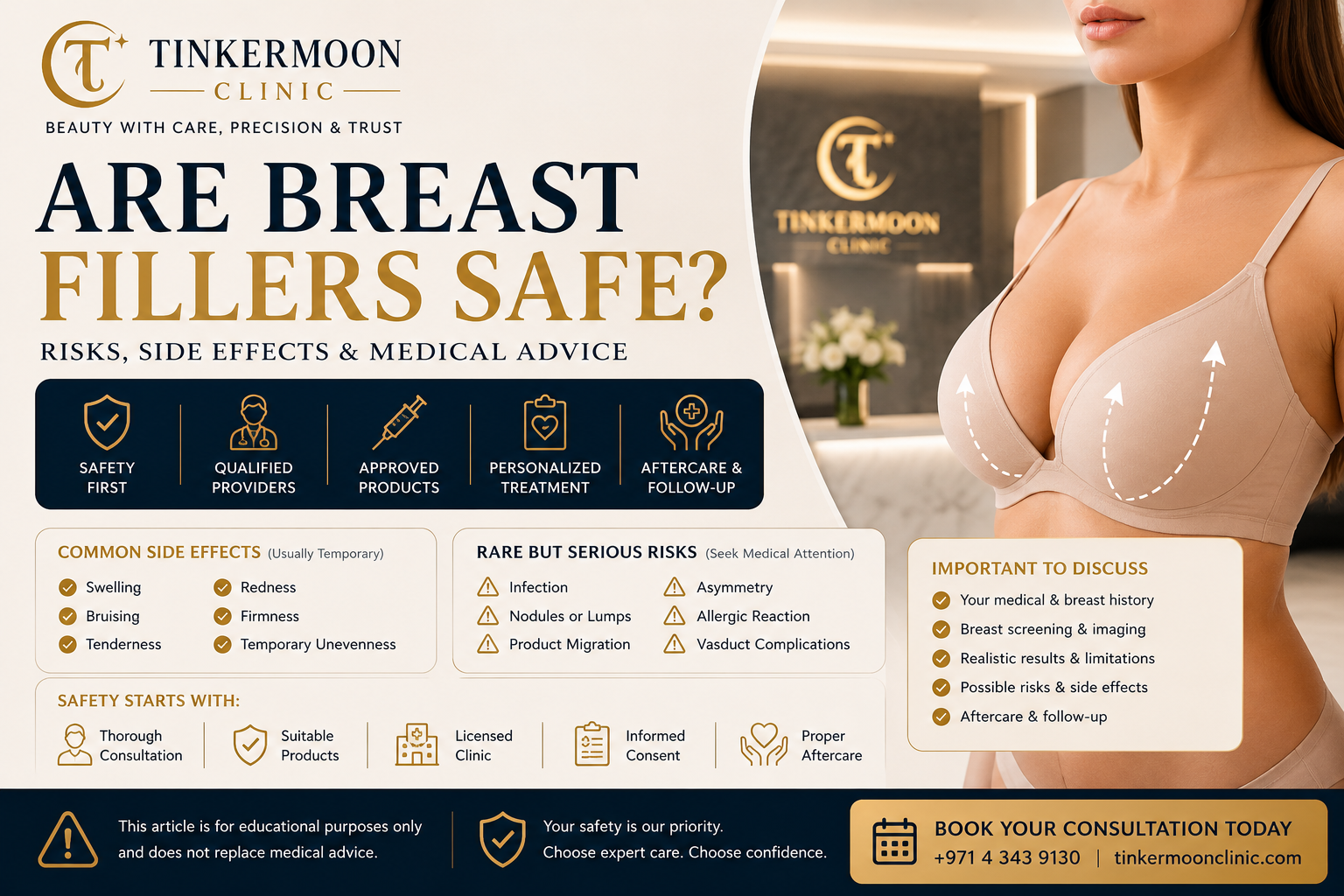
Side effects can vary from person to person. Your product, treatment plan, injection technique, and healing response all matter.
Common temporary effects may include:
- swelling;
- bruising;
- tenderness;
- mild redness at injection points;
- temporary firmness;
- temporary unevenness while the area settles.
These effects can happen after injectable treatments. Your clinic should explain what feels normal and what needs medical review.
You should not judge the final look too early. Swelling can change the shape during the first stage of recovery.
Rare but Serious Risks
Serious complications are less common, but patients should understand them before treatment. This is especially important when the treatment involves the breast area.
Possible risks may include infection, nodules, asymmetry, product migration, prolonged swelling, allergic reaction, tissue irritation, or vascular complications.
You should contact your clinic quickly if you notice severe pain, fever, increasing redness, unusual skin color, discharge, intense swelling, or symptoms that feel abnormal.
Fast communication matters. A safe clinic should give you clear instructions before you leave the appointment.
Who May Not Be Suitable for Breast Fillers?
Not every patient should have breast fillers. A professional provider should say no when the treatment does not fit the patient’s health, anatomy, or goals.
You may need to avoid or delay treatment if you have:
- active infection near the treatment area;
- unexplained breast lump or breast pain;
- recent abnormal breast imaging;
- known allergy to product components;
- certain autoimmune or bleeding conditions;
- poor healing history;
- pregnancy or breastfeeding;
- unrealistic expectations about size increase.
Your provider may also recommend medical clearance if your history raises concerns. This protects you and helps the clinic choose the safest plan.
Breast Fillers and Breast Screening
This is one of the most important topics to discuss before treatment.
Breast filler material may matter during future imaging or clinical checks. Your doctor may need to know exactly what product you received, where it was placed, and when you had the treatment.
For this reason, you should keep your treatment records. Ask your clinic for product details, batch information if available, treatment date, and placement notes.
You should also tell your imaging specialist about any previous breast filler treatment before mammography, ultrasound, or MRI.
This does not mean every patient will have a problem. It means documentation and honesty help future healthcare providers read your case more accurately.
How to Reduce Breast Filler Risks
You cannot remove every risk from an aesthetic procedure. But you can reduce risk by choosing the right clinic and asking better questions.
Choose a Qualified Provider
Your provider should understand breast anatomy, injectable safety, complication management, and patient selection. They should also know when not to treat.
Ask About the Product
Do not accept vague answers. Ask what product or method the clinic plans to use, why it suits your case, and what risks it carries.
Check the Clinical Setting
The treatment should take place in a suitable clinical environment. The clinic should follow hygiene, consent, recordkeeping, and aftercare standards.
Dubai Health Authority standards for non-surgical cosmetic procedures focus on licensed healthcare facilities, healthcare professional requirements, patient care, safety, and quality. You can review the DHA Standards for Non-Surgical Cosmetic Procedures for more background.
Follow Aftercare Carefully
Aftercare can help reduce irritation and support recovery. Follow your clinic’s advice about exercise, pressure, massage, heat exposure, and follow-up visits.
Breast Fillers vs Breast Implants: Safety Difference
Breast fillers and breast implants have different safety profiles. One is usually discussed as a non-surgical injectable option. The other is a surgical device-based option.
Breast implants can create a more noticeable and longer-lasting result. But surgery involves anesthesia, incisions, recovery, and long-term monitoring.
Breast fillers may involve less downtime for selected patients. But they still need proper product selection, clinical judgment, and careful follow-up.
The safer option depends on the patient. Your anatomy, goal, health history, risk tolerance, and future screening needs should guide the decision.
If you want a full comparison, read Breast Fillers vs Breast Implants. You can also review our page for Breast Implants in Dubai.
For broader patient education, the American Society of Plastic Surgeons explains that breast implants are FDA-approved devices for breast augmentation and reconstruction, but patients should understand the risks. You can read their page on breast implant safety.
Red Flags Before Breast Fillers
Some offers can look attractive online but still carry unnecessary risk. Be careful when a clinic avoids your questions or pushes you to book quickly.
Watch for these red flags:
- no proper consultation;
- unclear product name;
- no discussion of breast screening;
- no medical history review;
- pressure to pay immediately;
- promises of dramatic enlargement;
- very cheap price with no explanation;
- no aftercare instructions;
- treatment outside a clinical setting.
A safe provider will explain the treatment clearly. They will also tell you when breast fillers may not suit you.
Questions to Ask Before Treatment
Good questions help you compare clinics and avoid rushed decisions.
Ask these during consultation:
- Am I a suitable candidate for breast fillers?
- What product or method will you use?
- Is this product suitable for the breast area?
- What result is realistic for my body?
- What are the possible side effects?
- What symptoms need urgent attention?
- Could this affect future breast imaging?
- What records will you give me after treatment?
- Would breast implants suit my goal better?
- What aftercare should I follow?
If the provider cannot answer these questions clearly, pause before booking.
How to Choose a Safe Clinic in Dubai
Choose a clinic that focuses on consultation, product transparency, medical screening, realistic goals, and aftercare. Do not choose only by price.
The clinic should explain benefits and risks in plain language. It should also document your treatment and give you clear post-care instructions.
A good clinic will not promise every patient the same result. It will assess your body and recommend a plan that fits your anatomy and safety profile.
Sometimes, the best recommendation may be no treatment, delayed treatment, or referral for another option. That is a sign of responsible care.
You can explore all available aesthetic and body treatments on our services page, or read our guide on how to choose the right aesthetic clinic in Dubai.
Thinking About Breast Fillers in Dubai?
If you are considering breast fillers, start with a consultation. A professional assessment can help you understand whether breast fillers, breast implants, or another treatment option fits your goals safely.
This article is for educational purposes only and does not replace medical advice. Your treatment plan should always be personalized by a qualified professional after assessment.
FAQ
Breast fillers need careful consultation, suitable products, qualified providers, and clear aftercare. Safety depends on your medical history, treatment goals, product choice, and clinical setting.
Common temporary effects may include swelling, bruising, tenderness, redness, firmness, and temporary unevenness while the area settles.
Possible serious risks may include infection, nodules, product migration, allergic reaction, asymmetry, tissue irritation, prolonged swelling, or vascular complications.
They may be relevant to future imaging or clinical checks. Ask your provider whether the treatment could affect mammography, ultrasound, MRI, or future breast health reviews.
Patients with active infection, unexplained breast symptoms, abnormal imaging, certain allergies, pregnancy, breastfeeding, or unrealistic expectations may need to avoid or delay treatment.
They have different risk profiles. Breast fillers are non-surgical but still require careful injectable safety. Breast implants involve surgery and long-term monitoring. The safer option depends on your case.
Choose a qualified clinic, ask about the product, discuss breast screening history, follow aftercare instructions, and contact the clinic quickly if symptoms feel unusual.
Look for proper consultation, product transparency, licensed clinical standards, medical screening, realistic expectations, treatment records, and clear aftercare guidance.