When people ask what makes breasts look attractive, there isn’t one perfect answer. Breast appearance is influenced by factors such as proportion, shape, symmetry, position, and how the breasts fit with the rest of the body.
In aesthetic medicine, certain breast proportions are often used as reference points when doctors and patients discuss a balanced, natural-looking result. These measurements are not universal standards, though. Breast size and shape naturally vary from person to person based on genetics, age, pregnancy, weight changes, hormones, skin elasticity, and chest-wall anatomy.
This guide looks at commonly discussed breast proportions, natural breast shapes, symmetry, and the factors that influence breast size and appearance. It also explains what to consider if you’re thinking about breast enhancement in Dubai.
What Makes an Attractive Breast Shape?
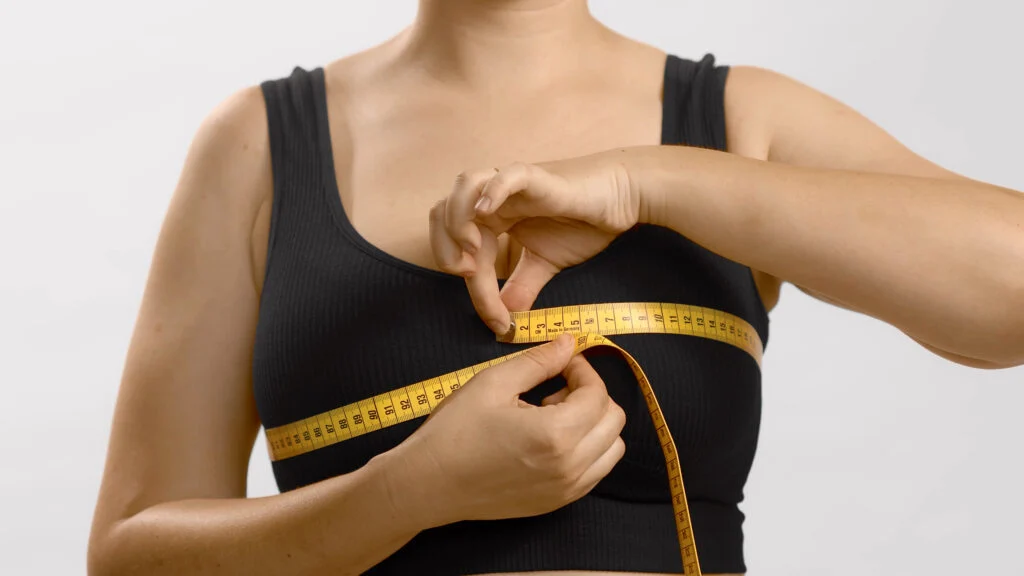
Research in aesthetic surgery has identified several features that are often associated with balanced, natural-looking breast proportions. One widely cited analysis by plastic surgeon Patrick Mallucci and colleagues looked at preferences related to breast volume and the shape of the upper and lower poles.
These characteristics include:
Interested in Breast Aesthetics & Enhancement?
Book a confidential clinical consultation for breast aesthetics and contouring at Tinkermoon Clinic, Century Plaza.

Approximately 45:55 Upper-to-Lower Pole Ratio
One commonly discussed aesthetic preference is an approximately 45:55 upper-to-lower pole ratio. This means that slightly more breast fullness is found below the nipple than above it.
This distribution can create a softer, gently curved appearance rather than a very full upper breast. It’s worth remembering, however, that the 45:55 ratio is only a reference point, not a rule that defines whether breasts are attractive or healthy.
Slight Upward Nipple Orientation
In some aesthetic assessments, the nipple-areola complex is considered more balanced when it has a slight upward orientation. A figure of around 20 degrees is often referenced, although nipple position naturally differs from person to person.
The exact angle is not necessary for an attractive breast shape. Nipple position can change with age, pregnancy, breastfeeding, skin elasticity, and the natural position of the breasts.
A Gentle Upper-Pole Slope
A natural-looking breast usually has a gradual transition from the upper chest toward the nipple rather than a sharp or overly prominent upper pole.
How much fullness appears in the upper pole varies from person to person. Breast tissue, body composition, and previous augmentation can all influence this area.
A Fuller Lower Pole
The lower part of the breast often has slightly more volume than the upper part. This can create the soft, teardrop-like appearance that is often associated with natural-looking breasts.
That said, breast anatomy varies widely, and there is no single shape that everyone needs to have or aim for.
What Are the Different Natural Breast Shapes?
Breasts naturally come in a wide range of shapes, and those shapes can also change over time. Age, pregnancy, breastfeeding, weight changes, hormonal fluctuations, and changes in skin elasticity can all affect breast appearance.
Some commonly described breast shapes include:
1. Teardrop Breasts
Teardrop-shaped breasts are generally fuller toward the lower pole, with a softer and more gradual slope toward the upper chest. This shape is often associated with natural-looking breast proportions.
2. Round Breasts
Round breasts have a more even distribution of fullness above and below the nipple, giving them a naturally circular appearance.
Some people naturally have round breasts, while implants and other augmentation procedures can also create a rounder contour.
3. Conical Breasts
Conical breasts tend to have a narrower base and more forward projection, giving them a more pointed or cone-like appearance.
The degree of projection can vary considerably from one person to another.
4. Asymmetrical Breasts
Breast asymmetry means the two breasts differ in some way, such as size, shape, height, volume, or nipple position.
Mild asymmetry is extremely common. In fact, perfectly identical breasts are unusual, and small differences are a normal part of human anatomy.
5. East-West Breasts
With an East-West breast shape, the nipples tend to point slightly outward, away from the center of the chest.
This appearance can be influenced by the natural direction of the breast tissue and the underlying shape of the chest.
What Determines Breast Shape and Size?
Breast size and shape are influenced by a combination of genetic, hormonal, and physical factors. These can include.
These include:
- Genetics
- Body composition
- Age
- Hormonal changes
- Pregnancy and breastfeeding
- Weight gain or weight loss
- Skin elasticity
- Breast tissue volume
- Chest-wall shape and width
- Natural asymmetry
This is why two people who wear the same bra cup size can still have very different breast shapes and proportions.
What Is the Ideal Breast Size?
There is no single breast size that is considered perfect for everyone.
A size that looks proportionate on one person may look very different on someone else. For this reason, aesthetic specialists look at breast dimensions in relation to factors such as chest width, height, shoulder structure, body proportions, and existing breast tissue.
Bra cup size also isn’t a reliable way to define an ideal breast size because sizing can vary between brands and countries.
Instead, an aesthetic assessment looks at the individual measurements and proportions that contribute to overall breast appearance.
| Parameter | Commonly Referenced Aesthetic Consideration | Natural Variation |
|---|---|---|
| Upper-to-lower pole ratio | Approximately 45:55 | 50:50 or greater upper-pole fullness can occur naturally |
| Nipple position | Slight upward orientation may be preferred aesthetically | Nipple position varies widely |
| Breast symmetry | Balanced appearance between both breasts | Mild asymmetry is very common |
| Upper-pole contour | Gradual, gentle slope | Fullness varies with anatomy and tissue volume |
| Lower-pole contour | Smooth, rounded projection | Shape varies according to breast tissue and skin elasticity |
These measurements and proportions are reference points used in aesthetic assessment, not universal standards for what healthy or attractive breasts should look like.
Is Breast Symmetry More Important Than Breast Size?
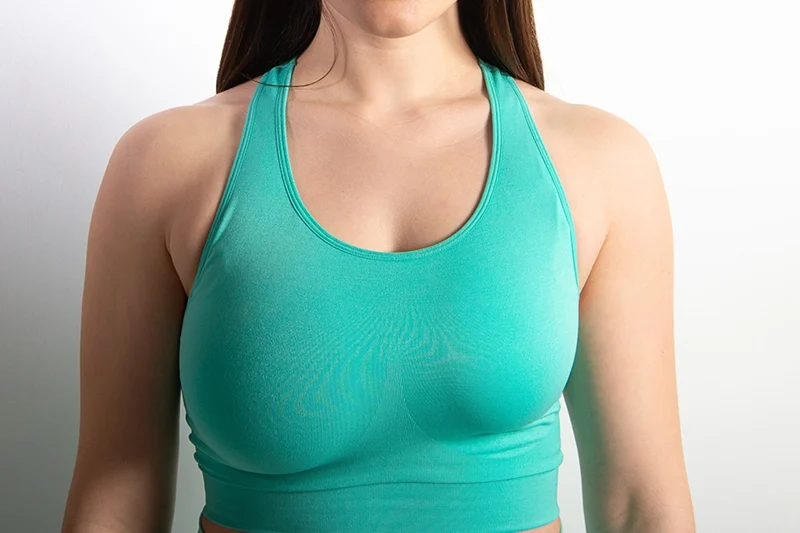
When it comes to breast aesthetics, overall proportion and symmetry can matter more than breast size alone
Breast asymmetry can involve differences in:
- Breast volume
- Breast height
- Shape
- Nipple position
- Areola size
- Lower-pole fullness
Small differences between the breasts are normal and are often barely noticeable. When asymmetry is more pronounced, carefully selected cosmetic procedures may sometimes help, depending on the cause and the person’s anatomy.
The aim isn’t to create perfectly identical breasts. Instead, treatment focuses on achieving a balanced appearance that fits the individual’s body.
Can Breast Shape Change Over Time?
Yes. Breast shape can change naturally throughout life.
Pregnancy and Breastfeeding
Pregnancy brings hormonal and structural changes to the breasts. As the breasts enlarge during pregnancy and change after breastfeeding, their volume, skin elasticity, and position may also change.
Weight Changes
Significant weight gain or weight loss can affect breast volume because breasts contain both glandular tissue and fat.
Losing a substantial amount of weight, particularly over a short period, can also affect skin laxity and breast position.
Aging
As we age, the skin gradually loses some of its elasticity. Changes in connective tissue and breast tissue can also cause the breasts to sit lower on the chest and alter their overall shape.
Hormonal Changes
Hormonal fluctuations can affect breast fullness and tenderness, sometimes temporarily and sometimes more permanently. These changes are particularly common during reproductive years and around major hormonal transitions.
What Are the Options for Improving Breast Proportions?
If you’re unhappy with your breast size, shape, symmetry, or position, there are several possible treatment options. The most suitable approach depends on your anatomy, goals, medical history, and how much change you want to achieve.
Breast Augmentation
Breast augmentation uses implants to increase breast volume and can also change breast projection and contour. The choice of implant size and shape should be based on the patient’s anatomy rather than simply choosing the largest possible implant. If you are considering this option, learn more about breast implants in Dubai.
Breast Lift
A breast lift, also known as mastopexy, is mainly used to improve breast position and address sagging rather than simply add volume.
It may be an option when aging, pregnancy, weight loss, or reduced skin elasticity has caused the breasts to sit lower on the chest.
Fat Transfer
Fat transfer uses fat taken from another area of the body to add volume to the breasts. How much volume can be added depends on the amount of suitable donor fat available and how much of the transferred fat remains after the procedure.
Injectable Treatments
In some cases, injectable treatments may be discussed for specific contour concerns. Whether they are appropriate depends on the breast anatomy, the product being considered, the treatment goal, and a medical assessment.
Because of the specific considerations involved, injectable treatments in the breast should always be discussed with a qualified medical professional rather than treated as a routine cosmetic procedure.
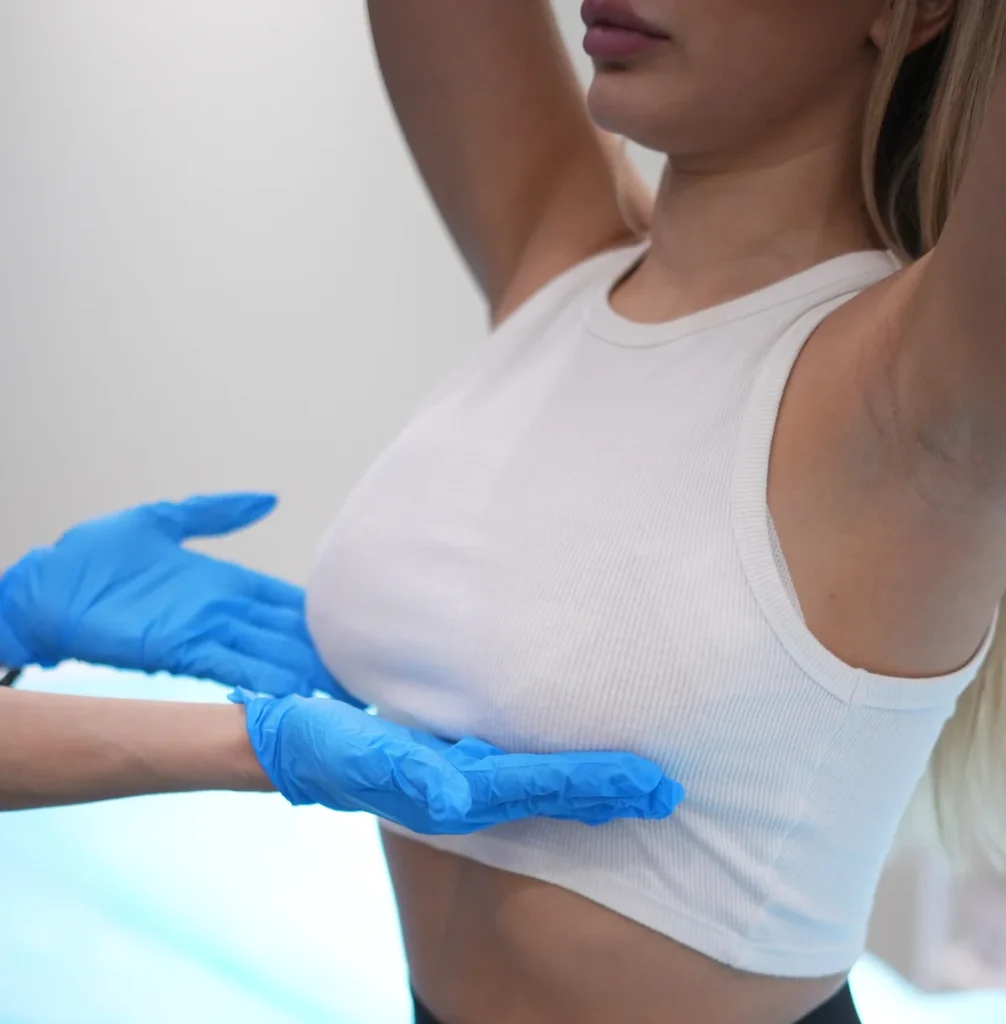
How Do Doctors Assess Breast Proportions?

Assessing breast aesthetics involves more than simply measuring breast volume.
A clinician may consider:
- Chest width
- Breast base width
- Breast projection
- Nipple position
- Breast symmetry
- Skin quality
- Existing breast tissue
- Degree of breast ptosis or sagging
- Previous surgery or augmentation
- Overall body proportions
- The patient’s aesthetic goals
Looking at these factors together helps the clinician understand what is realistically achievable and whether a particular treatment is appropriate.
What Does a Natural-Looking Breast Result Mean?
A natural-looking result doesn’t necessarily mean achieving a particular cup size or copying a specific breast shape.
Instead, the goal is usually to create harmony between the breasts and the rest of the body. This can involve.
- Breast volume
- Breast position
- Chest width
- Upper- and lower-pole proportions
- Nipple position
- Overall body shape
Ultimately, the right aesthetic result is highly individual. A shape or proportion that looks balanced on one person may not suit someone with a different chest structure or body proportions.