


Breast pain is a common concern that can affect people at different stages of life. It may feel like tenderness, aching, burning, tightness, or a sharp or stabbing sensation. Sometimes the discomfort affects both breasts, while in other cases, it is limited to one specific area.
Although breast pain can understandably cause concern, it is usually not a sign of breast cancer. Hormonal changes, menstrual cycles, pregnancy, breastfeeding, medications, and even muscle strain can all cause breast discomfort.
Understanding the possible causes can help you recognize when breast pain is likely to be temporary and when it should be evaluated by a healthcare professional.
The pattern, location, duration, and accompanying symptoms of breast pain can provide important clues about its possible cause.
Interested in Breast Fillers & Natural Contouring?
Discover non-surgical breast enhancement and symmetry restoration at Tinkermoon Clinic, Century Plaza, Jumeirah 1.

What Is Breast Pain?

Breast pain, medically known as mastalgia, refers to discomfort or tenderness felt in the breast or surrounding area. The pain can range from mild sensitivity to more significant discomfort that interferes with daily activities.
Breast pain is generally classified into two main types:
- Cyclic breast pain: Pain associated with hormonal changes during the menstrual cycle. It commonly affects both breasts and may become more noticeable before a period.
- Non-cyclic breast pain: Pain that does not follow a predictable menstrual pattern. It may affect one breast or one specific area and can have several different causes.
Pain can also sometimes feel as though it is coming from the breast when the actual source is the chest wall, muscles, ribs, neck, shoulder, or back.
Understanding breast anatomy can also help explain why discomfort may sometimes be felt in different areas around the breast.
10 Common Reasons for Breast Pain
1. Hormonal Changes
Hormonal fluctuations are one of the most common causes of breast tenderness and discomfort.
Changes in estrogen and progesterone levels can affect breast tissue, causing temporary swelling, sensitivity, or aching. This is particularly common around the menstrual cycle but can also occur during other periods of hormonal change.
Hormonal breast pain often affects both breasts and may feel like heaviness, fullness, or a dull ache.
2. Menstrual Cycle
Many people experience breast pain or tenderness before their period. This type of discomfort may begin up to two weeks before menstruation, become more noticeable as the period approaches, and improve once the period starts or ends.
Cyclic breast pain commonly affects both breasts and may extend toward the armpit. Keeping track of when your symptoms occur can help determine whether your pain follows your menstrual cycle.
3. Pregnancy
Breast tenderness can be an early symptom of pregnancy.
During pregnancy, hormonal changes prepare the breasts for milk production. This can cause the breasts to become larger, fuller, heavier, or more sensitive. The nipples may also become more sensitive than usual.
If breast tenderness occurs along with a missed period or other pregnancy symptoms, a pregnancy test may help clarify the cause.
4. Breastfeeding
Breast pain can also occur during breastfeeding, particularly when the breasts become overly full or when there are problems with milk drainage.
Conditions such as mastitis, a breast infection, can cause pain along with redness, warmth, swelling, and sometimes fever or flu-like symptoms.
If you are breastfeeding and develop significant breast pain accompanied by fever or a hot, red, swollen area, medical evaluation is important.
5. Breast Cysts
Breast cysts are fluid-filled sacs that can develop within breast tissue. Some cysts can cause localized tenderness or discomfort, particularly when they become larger or more sensitive around hormonal changes.
Cysts are generally benign, but a new lump or persistent localized pain should still be assessed by a healthcare professional when appropriate.
6. Fibrocystic Breast Changes
Fibrocystic breast changes can cause breasts to feel lumpy, swollen, tender, or painful. Symptoms may become more noticeable before menstruation because of hormonal fluctuations.
These changes are generally benign and do not mean that you have breast cancer. However, any new or unusual breast change should be evaluated if it persists or concerns you.
7. An Ill-Fitting Bra
A bra that does not provide enough support can contribute to breast discomfort, particularly during exercise or other physical activities.
This may be more noticeable in people with larger breasts, where inadequate support can also contribute to discomfort in the shoulders, neck, and back.
Wearing a properly fitted supportive bra, including a sports bra during exercise, may help reduce discomfort.
8. Muscle Strain or Chest Wall Pain
Not all pain that feels like breast pain actually comes from the breast tissue.
Muscle strain, an injury, or inflammation around the ribs and chest wall can cause discomfort that feels as though it is coming from the breast. Activities such as lifting weights, exercising, or repetitive upper-body movements may contribute to this type of pain.
Conditions affecting the chest wall, such as costochondritis, can also cause pain around the breast area.
9. Medications
Some medications can contribute to breast tenderness or pain.
Hormonal medications, including certain birth control pills and hormone therapies, may affect breast sensitivity. Some antidepressants and other medications have also been associated with breast pain.
If you notice breast pain after starting a new medication, do not stop taking it without medical advice. Instead, discuss the symptom with your healthcare provider to determine whether the medication could be contributing to it.
10. Breast Infections
Breast infections can cause significant pain and tenderness. Mastitis is one example and is particularly common during breastfeeding, although breast infections can occur in other circumstances as well.
Symptoms may include:
- Breast pain or tenderness
- Redness
- Warmth
- Swelling
- A localized area of firmness
- Fever or chills
Because an infection may require medical treatment, persistent or severe symptoms should be evaluated promptly.
Is Breast Pain a Sign of Breast Cancer?
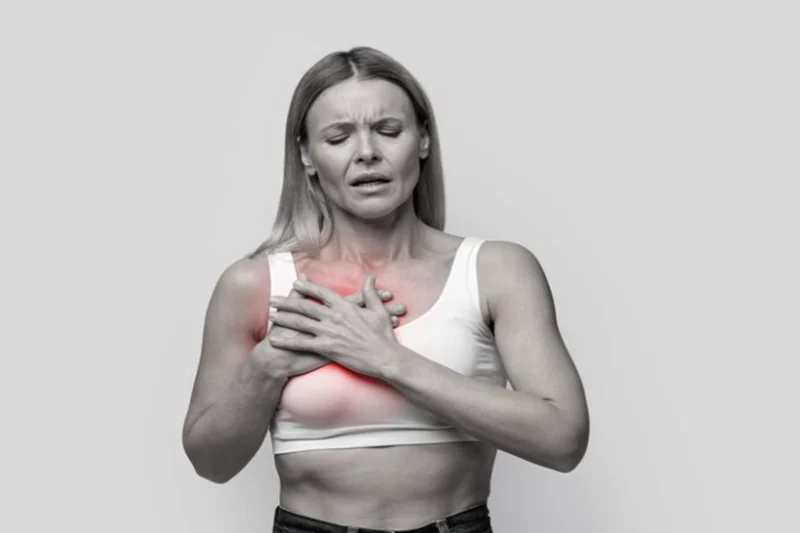
Breast pain by itself is usually not a sign of breast cancer. Most breast cancers do not initially cause breast pain, and hormonal or benign breast conditions are much more common explanations for discomfort.
According to the American Cancer Society, breast pain is usually not caused by cancer. Hormonal changes and benign breast conditions are much more common causes of breast discomfort. However, persistent or localized pain, especially when accompanied by other breast changes, should still be evaluated by a healthcare professional.
However, breast cancer can sometimes cause pain, particularly when it is persistent and localized. This is why ongoing or unexplained symptoms should not simply be ignored.
Pay attention to breast pain that occurs together with other changes, such as:
- A new lump or swelling in the breast or armpit
- Changes in breast size or shape
- Skin dimpling or an orange-peel appearance
- Persistent redness or skin changes
- Nipple inversion or unusual nipple changes
- Nipple discharge, particularly bloody discharge
- A persistent rash around the nipple
- A specific area of breast pain that does not improve
These symptoms do not necessarily mean cancer, but they should be assessed by a healthcare professional.
When Should You See a Doctor for Breast Pain?
Not every episode of breast pain requires medical attention. However, breast pain that is persistent, unexplained, localized, or accompanied by other breast changes should be assessed by a healthcare professional.
- Persists for more than a couple of weeks
- Continues after one or two menstrual cycles without an obvious explanation
- Is consistently located in one specific area
- Becomes progressively worse
- Interferes with sleep or daily activities
- Continues after menopause
- Is accompanied by a breast lump or other noticeable breast changes
- Occurs with a personal or family history that increases your breast cancer risk
Seek prompt medical attention if breast pain occurs with significant redness, swelling, warmth, fever, chills, a hard fixed lump, bloody nipple discharge, or noticeable changes in the breast or nipple. mptoms do not necessarily mean that you have breast cancer, but they should not be ignored.
How Is the Cause of Breast Pain Diagnosed?
The first step is usually a detailed medical history and clinical breast examination.
Your doctor may ask:
- Where exactly do you feel the pain?
- Is it in one breast or both?
- When did it start?
- Does it occur before your period?
- Is the pain constant or intermittent?
- Have you noticed a lump or other breast changes?
- Are you taking hormonal medications or other medicines?
- Have you recently experienced an injury or increased physical activity?
Depending on your symptoms and examination, additional testing may be recommended. This can include breast ultrasound or mammography. The type of imaging recommended depends on factors such as your age, symptoms, location of the pain, and whether other breast changes are present.
Keeping a simple record of when the pain occurs, how severe it is, and whether it corresponds with your menstrual cycle can also help your doctor identify patterns.
How Can Breast Pain Be Managed?
Treatment depends on the underlying cause.
For mild, uncomplicated breast pain, some measures that may help include:
- Wearing a properly fitted supportive bra
- Using a sports bra during exercise
- Applying appropriate pain-relief measures recommended by your healthcare provider
- Avoiding activities that aggravate chest or breast discomfort
- Keeping track of symptoms and their relationship to your menstrual cycle
Some people also notice that reducing caffeine helps, although research has not established a consistent benefit for everyone.
If breast pain is caused by a medication, hormonal treatment, infection, cyst, or another underlying condition, treating or adjusting the cause may be more effective than simply treating the pain itself. Medication changes should always be discussed with a healthcare professional.
Frequently Asked Questions About Breast Pain
Is breast pain normal?
Why do my breasts hurt before my period?
Can breast pain be caused by stress?
Does breast pain mean I have breast cancer?
Why does only one breast hurt?
When should I worry about breast pain?
Conclusion
Breast pain can have many causes, and most are benign. Hormonal changes, menstrual cycles, pregnancy, breastfeeding, cysts, medications, inadequate breast support, and chest wall problems can all contribute to breast discomfort.
While Breast Pain alone is rarely a sign of breast cancer, persistent or unexplained symptoms should be evaluated—especially when accompanied by a lump, nipple discharge, skin changes, or other unusual breast symptoms.
Understanding your normal breast appearance and recognizing changes early can help you seek appropriate medical care when needed.
Learning how to perform a breast self-exam can also help you become familiar with your normal breast appearance and notice changes that may need medical evaluation.